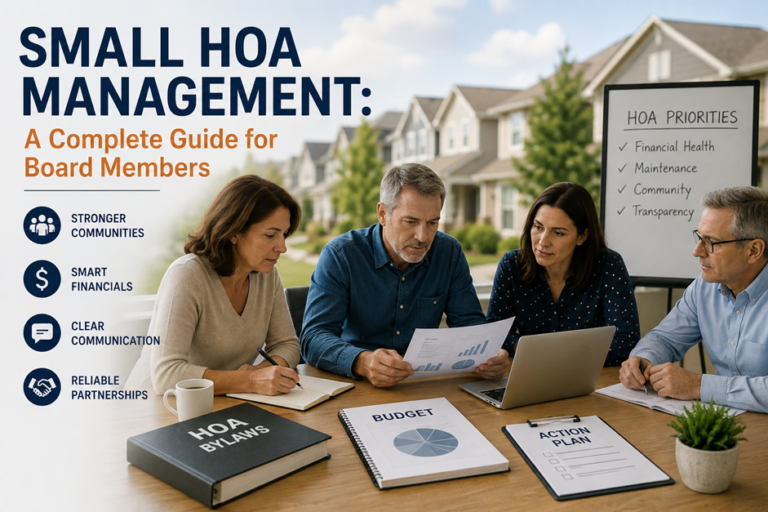
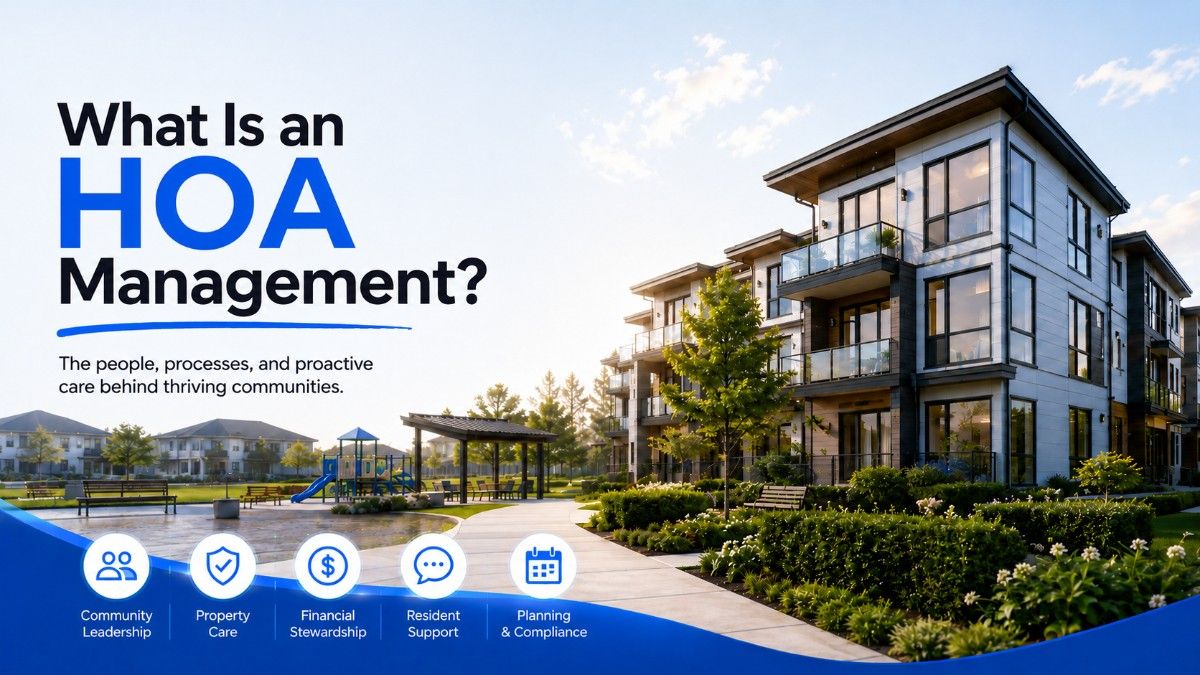
HOA Management refers to the administrative, financial, and operational support provided to help an HOA function effectively. This support may be provided by a professional management company or handled directly by the Board through self-management.
Key Responsibilities of an HOA Management
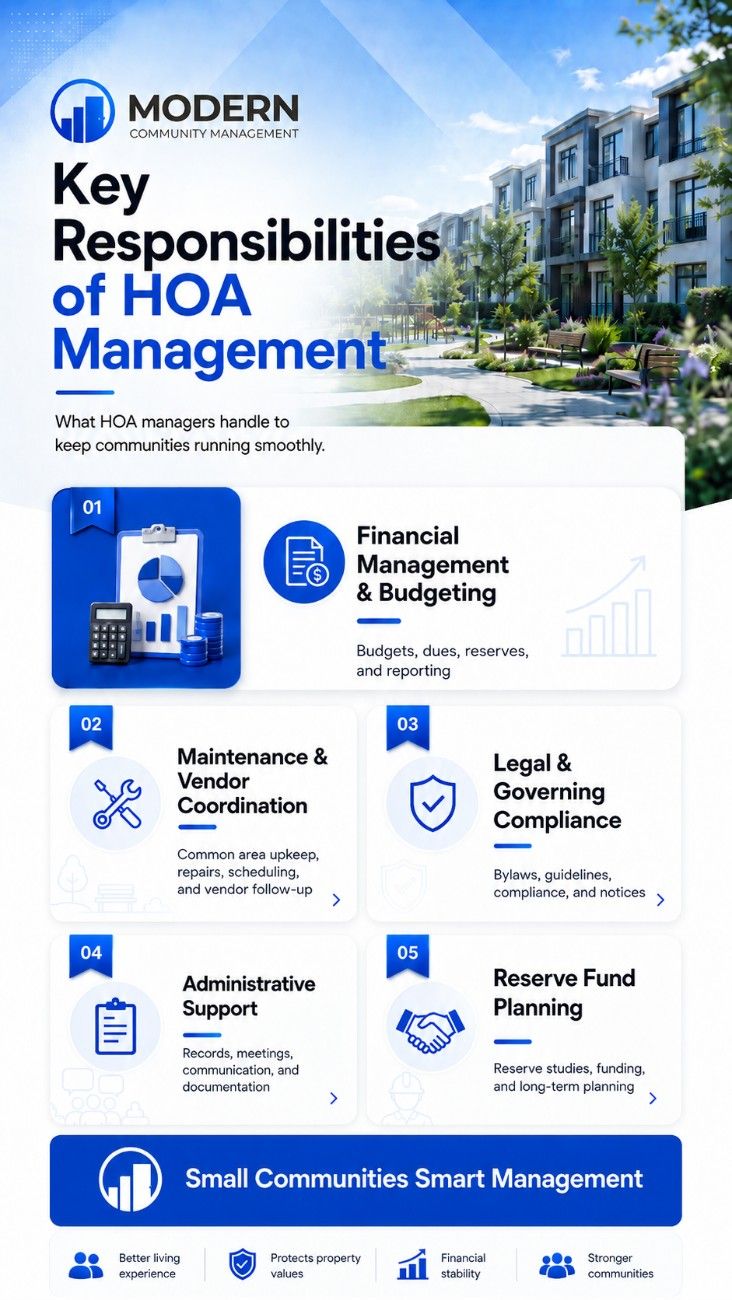
1. Financial Management & Budgeting
Effective financial management is essential to maintaining the long-term health of an HOA. Professional support assists with budgeting, monitoring income and expenses. Ongoing financial oversight provides the Board with clear visibility into the association’s financial position, supports informed decision-making, and helps ensure the community is prepared for unexpected expenses, such as major infrastructure repairs or system replacements.
2. Maintenance & Vendor Coordination
Maintenance and vendor coordination involves overseeing the upkeep of the community’s common areas, including landscaping, lighting, sidewalks, parking areas, and shared amenities. Responsibilities include scheduling routine services, coordinating with vendors, and ensuring maintenance work is completed in a timely and professional manner. When unexpected issues arise, such as plumbing or electrical problems in common areas, repairs are arranged and monitored through completion. Regular oversight helps ensure community assets remain safe, well-maintained, and aligned with the standards and expectations of the association.
3. Legal & Governing Compliance
HOAs are required to operate in accordance with state laws, local regulations, and governing documents such as CC&Rs, bylaws, and rules and regulations. As legal requirements and industry best practices evolve, staying compliant can be challenging for volunteer boards. Professional support helps monitor regulatory changes, implement necessary updates, and ensure that community processes remain aligned with applicable requirements. This includes maintaining accurate records, distributing required notices, and supporting proper documentation of board decisions, helping to reduce risk and promote sound governance.
4. Administrative Support
Administrative support encompasses the daily communication and documentation needs of the HOA. Key responsibilities include managing correspondence, responding to homeowner inquiries, distributing community announcements and updates, preparing agenda, coordinating schedules, and maintaining accurate records of board meetings and decisions. This function helps ensure clear communication, transparency, and effective collaboration between the Board of Directors and homeowners.
5. Reserve Fund Planning
Reserve fund planning involves preparing for the future repair and replacement of major community assets, such as roofs, pavement, fencing, lighting systems, and other common area components. It includes evaluating the expected lifespan of these assets, estimating future costs, and ensuring adequate funds are set aside over time. Regular review of reserve funding helps the Board make informed financial decisions, reduce the likelihood of special assessments, and ensure the community is financially prepared for significant capital projects.
Why Do Small Communities Need Management?

Now, the question arises, why do small communities need management? Here are a few reasons one can explore.
A. Preventing Burnout
Board members in small communities balance HOA duties with full-time jobs. Responsibilities like budgeting, coordination, and communication eat up significant time. Professional support removes the hectic tasks from residents and gives space for decision-making. This creates a better balance between personal life and community responsibilities and prevents overload over time.
B. Unbiased Enforcement
Professional support brings an objective and impartial approach to rule enforcement and assessment collection. By applying governing documents and community policies consistently to all homeowners, the association can ensure fair and equitable treatment across the community. This helps reduce the discomfort often associated with difficult conversations, minimizes potential conflicts between neighbors, and promotes compliance while maintaining established community standards.
C. Legal Compliance
Communities follow state regulations, local laws, and governing documents such as CC&Rs. These rules change over time and require attention. Professional support tracks these updates and applies required changes to community processes. Records, notices, and decisions stay aligned with legal expectations, lowering exposure to procedural errors or regulatory issues.
D. Financial Oversight
Community funds require structured budgeting for regular expenses and future repairs. Professional support tracks income, expenses, and reserve planning for long-term requirements. This gives clear visibility into financial position and prepares the community for unexpected expenses, such as major infrastructure repairs or system replacements.
Management Options For Small HOAs (2-50 Units)
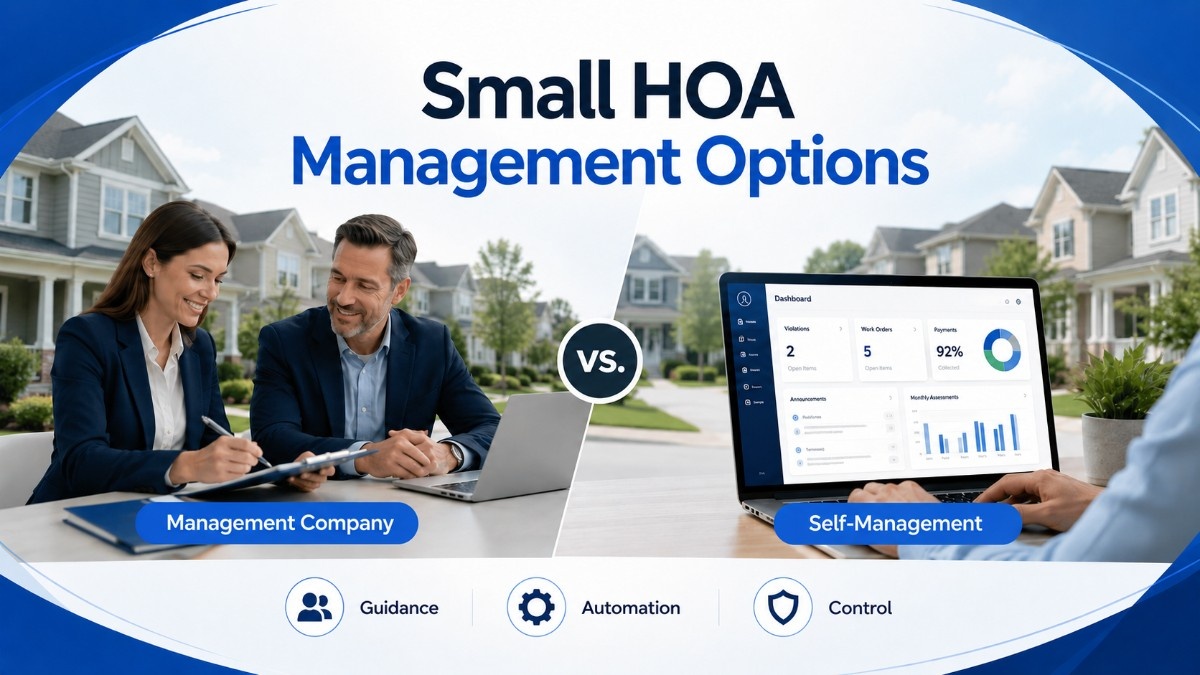
Small HOAs generally choose between two primary approaches to manage the community , depending on their needs, budget, and available volunteer resources. One option is to partner up with a professional management company to handle day-to-day operations, including financial management, vendor coordination, homeowner communications, and administrative support. While the management company manages daily tasks, the Board of Directors retains decision-making authority and governance oversight.
Another option is self-management, where the Board uses software such as AppFolio or Buildium to manage community operations. These platforms can help streamline tasks such as collecting assessments, tracking maintenance requests, and communicating with homeowners. While this approach can reduce management costs, it also requires a significant time commitment from Board members and places responsibility for compliance, financial oversight, and day-to-day operations entirely on the Board.
Key Takeaways
- HOA management involves overseeing and supporting the day-to-day operations and governance of a residential community.
- Responsibilities include financial management, maintenance coordination, rule enforcement, and administrative support.
- It assists the Board of Directors in making informed decisions and carrying out its responsibilities effectively.
- The goal is to maintain community standards, protect property values, and promote a positive living environment.
- Effective HOA management helps ensure the association operates efficiently, fairly, and in compliance with its governing documents.
For more information, visit Modern Community Management.