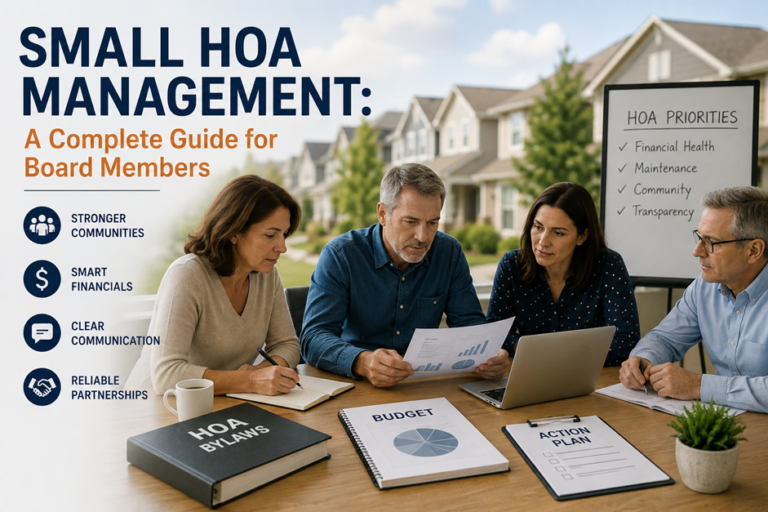
If you’re a board member, you already know serving on the board of a small HOA comes with a wide range of responsibilities. From responding to homeowner inquiries and making community decisions to managing meetings, maintaining records, overseeing finances, and coordinating with vendors, board members are expected to handle many important tasks. As a result, more boards are turning to management services. According to Davis-Stirling, California has more than 54,000 community associations, showing just how common HOA governance has become.
Discover the HOA management services MCM offers before making your decision.
What HOA Management Services Include?
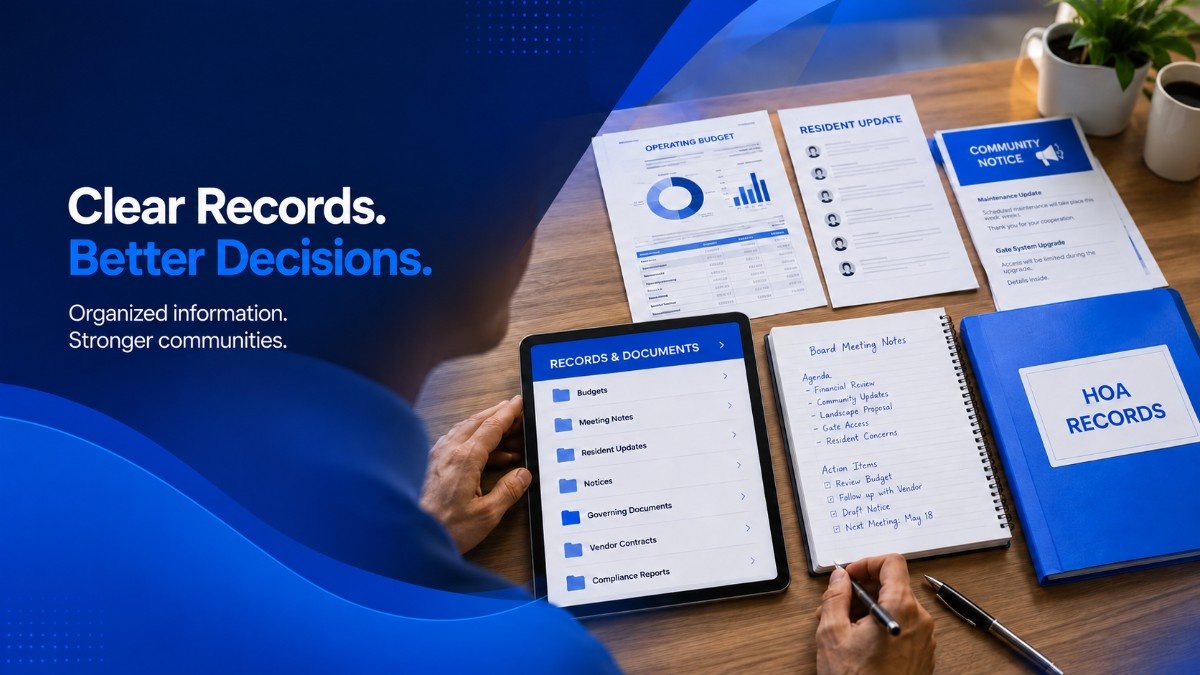
Every HOA management company has a different scope of work. That makes it important to understand what is included.
Financial Management
Financial management includes developing the association’s annual budget, accurately recording all income and expenses, and monitoring homeowner assessments and payments. It also includes maintaining financial records, reviewing and processing vendor invoices, reconciling bank accounts, and tracking account activity. Monthly financial reports are prepared for the board to provide a clear view of the association’s financial position and support informed decision-making.
Homeowner Communication
Modern Community Management helps ensure timely, consistent, and organized communication between the board and residents. This includes responding to homeowner inquiries, processing requests, and directing concerns to the appropriate board member or vendor when needed. Management also prepares and distributes meeting notices, assessment reminders, community announcements, and other association communications on behalf of the board. All homeowner correspondence and communication records are maintained in a centralized system, providing accurate documentation and easy access for future reference.
Maintenance & Vendor Coordination
Our maintenance team coordinates with board members and vendors for routine maintenance, repairs, and community improvement projects. This includes obtaining proposals, scheduling work, monitoring progress, verifying completed services, processing approved invoices, and following up to ensure work is completed to the association’s standards.
Board Coordination
We provide administrative and operational support to the board by scheduling board meetings in accordance with the association’s governing documents, preparing meeting notices, agendas, and board packets, and coordinating member participation where required. Management also records meeting minutes, tracks action items, assists with the implementation of board decisions, and maintains organized association records to help the board operate efficiently and make informed decisions.
Community Rules And Enforcement
We assist the board with the fair and consistent enforcement of the association’s governing documents. This includes conducting property inspections, documenting reported violations, and notifying the board of all observed or reported compliance issues. Management provides recommendations for corrective action in accordance with the association’s governing documents and enforcement policies, while the board retains the authority to determine the appropriate course of action.
Resale & Ownership Transfers
HOA management services assist with ownership transfers by processing resale and ownership change requests, verifying buyer and seller information, updating association records, and maintaining accurate owner and account information. Management also coordinates with escrow companies, title companies, real estate agents, and homeowners to help ensure a smooth ownership transition.
Responsibilities Retained by the HOA Board
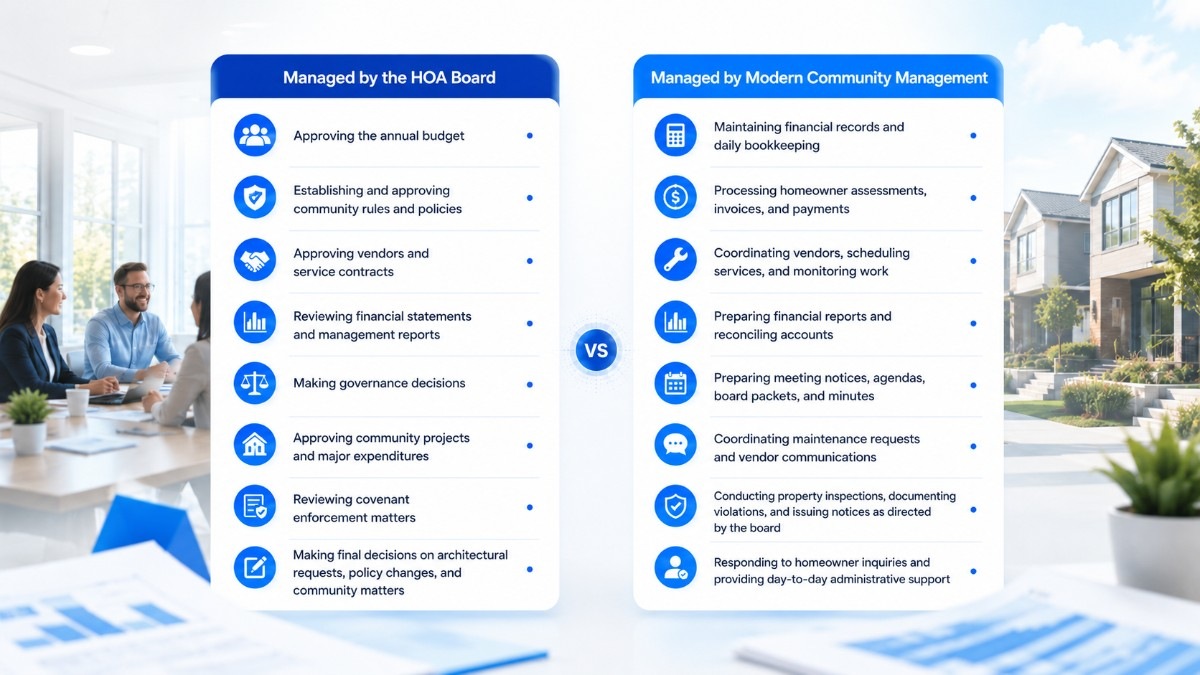
This clearly differentiates between what tasks are done by the HOA board and Modern Community Management. In case of any doubts, you can reach out to MCM for more help.
Common Misconceptions About the Board’s Role
Many small HOA boards unintentionally take on responsibilities that are better handled by the management company. Common misconceptions include:
- Managing day-to-day operations instead of focusing on governance and oversight.
- Communicating directly with vendors instead of allowing management to coordinate services.
- Handling routine homeowner requests rather than directing them through the management company.
- Becoming involved in administrative tasks such as notices, records, and meeting logistics.
- Confusing decision-making responsibilities with operational execution.
- Overlooking the distinction between approving actions and carrying them out.
A well-managed HOA operates most effectively when the board focuses on leadership and decision-making while the management company handles the association’s day-to-day administrative and operational responsibilities.
Conclusion
Effective HOA management is built on a clear partnership between the board and the management company. By clearly defining the roles, boards can focus on governance rather than daily operations, resulting in improved efficiency, stronger compliance, better communication, and a more positive experience for homeowners. Partnering with a professional HOA management company like MCM allows board members to lead with confidence while ensuring the community is managed effectively, professionally, and in accordance with the association’s governing documents.
For more information, click on Modern Community Management.