
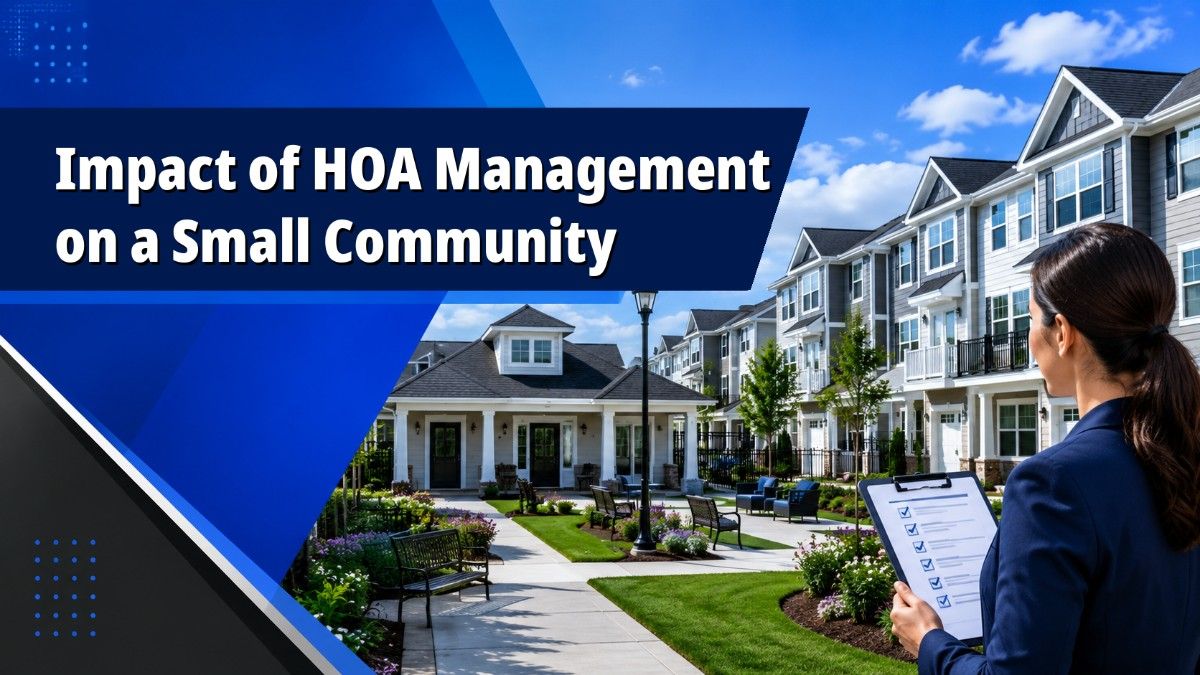
Do you know what does a management company do for an HOA? An HOA management company plays a vital role in helping small communities operate efficiently, stay financially healthy, and remain well-maintained. National homeowner satisfaction surveys show that many residents view community association living positively and believe community managers provide value and support.
Small HOA communities typically consist of 2 to 50 units where residents share ownership and responsibility for common areas such as roads, landscaping, parking areas, and other community amenities. Because these communities have fewer homeowners, every decision has a greater impact on the neighborhood, making effective management especially important.
Below are 10 key ways an HOA management company adds value, reduces the workload on volunteer board members, and helps small communities thrive.

Neutral Rule Enforcement
An HOA management company serves as an impartial enforcer of the community’s governing documents, applying rules consistently and fairly to all homeowners. By handling compliance matters objectively, it reduces direct neighbor-to-neighbor conflicts and ensures decisions are based solely on the association’s established policies and guidelines. This approach promotes transparency, minimizes personal disputes, and helps maintain community standards while treating every resident equally.
Financial Fraud Protection
An HOA management company helps safeguard community funds by implementing structured financial controls and approval processes for every transaction. By separating financial responsibilities and maintaining oversight of collections, payments, and accounting records, it reduces the risk of errors, fraud, or misuse of association funds. Clear financial reporting and accurate recordkeeping also provide homeowners and board members with greater transparency and confidence that community finances are being managed responsibly.
Essential Service Plans
Not every HOA requires full-service management. Many small communities only need support with specific tasks such as billing, collections, financial reporting, tax preparation, or record maintenance. Most HOA management companies offer flexible service plans with optional add-on services, allowing boards to choose the level of support that best fits their budget and community needs. This approach helps associations control costs while paying only for the services they truly need.
Board Liability Protection
HOA board members are volunteers who often have limited experience with legal and governance requirements. An HOA management company provides guidance on state laws, governing documents, insurance requirements, and established best practices. It also helps maintain accurate meeting minutes and decision records, reducing the risk of legal disputes and personal liability. With professional support, board members can make informed decisions with greater confidence while helping the association remain compliant.
Contractor Network Access
Finding dependable contractors is difficult, especially for communities with limited negotiating power. Existing vendor networks provide access to licensed professionals and multiple bids for maintenance and repair projects. Contractors decline to prepare written proposals when the project value does not justify the time involved. Existing relationships with vendors give boards additional options when selecting contractors.

Digital Record Management
Governing documents, meeting minutes, contracts, and financial records accumulate over the years. Some records require permanent retention, while some are stored temporarily. Digital portals place documents in one location and preserve community history when board members change. Residents and board members can thus easily find records during audits, disputes, unit sales, or document requests.
Simplifies Property Resale Transactions
An HOA management company plays an important role in managing resale certification requests and supporting smooth property transfers. When a unit is sold, buyers, lenders, and title companies require accurate information regarding association documents, account balances, outstanding dues, violations, and community requirements before closing. Resale certificates provide the necessary details to verify the homeowner’s account status and association records. By maintaining organized records and ensuring timely disclosures, HOA management companies help prevent delays, reduce confusion, and create a smoother experience for all parties involved in the transaction.
Architectural Review Control
Homeowners often need approval before making exterior modifications such as installing fences, changing paint colors, adding sheds, installing solar panels, or building patio covers. An HOA management company helps coordinate the architectural review process by ensuring each request is evaluated against the community’s design guidelines and established procedures. Maintaining written approvals creates a clear record for future reference, supports consistent decision-making, and helps preserve the neighborhood’s overall appearance. This process also reduces disputes by ensuring that all homeowners are treated fairly and that community standards are applied consistently.
Reserve Fund Planning
Roofs, roads, clubhouses, pools, and other shared assets age over time, so community management companies take the responsibility of conducting studies, estimating replacement costs, and identifying future expenses years in advance. Boards use this data to set contribution levels and plan projects. Long-term financial planning gives communities a transparent picture of upcoming expenses and prevents unexpected special assessments from catching residents off guard.
Board Transition Management
Board members change over time, creating a need for organized transitions between leadership teams. An HOA management company helps preserve important community knowledge by maintaining records of policies, contracts, ongoing projects, financial information, and operational details. Proper documentation and structured handovers ensure incoming board members have access to the information they need to make informed decisions from day one. This continuity reduces confusion, protects the association’s history, and helps new directors understand ongoing responsibilities and community obligations.
What Does an HOA Management Company NOT Do?
- It’s essential to note that a community management company does not replace the board or take ownership of the community. Board members still approve budgets, adopt rules, and make major decisions.
- The company cannot change bylaws, vote in elections, or spend reserve funds without board authorization.
- Does not provide interior design or home decoration services for individual properties.
- It also cannot guarantee property values or force homeowners to cooperate. Software portals, accounting tools, and maintenance systems still need board direction. Site visits, vendor coordination, and document preparation involve people, not just technology.
- The company carries out responsibilities outlined in the contract and follows board-approved policies and state requirements.
For more information, you can check out this blog: HOA Management Services For Small Communities
Conclusion
Choosing the right HOA management company depends on the community’s size, budget, and priorities. Professional management brings experience, vendor connections, financial oversight, and recordkeeping practices that volunteer boards may not have. Understanding what management companies do and what stays with the board helps communities choose services that match their needs and long-term goals.
If your community comprises 2-50 units and you’re looking for affordable HOA support, visit MCM. MCM offers service plans designed around the needs of smaller communities.